Scope
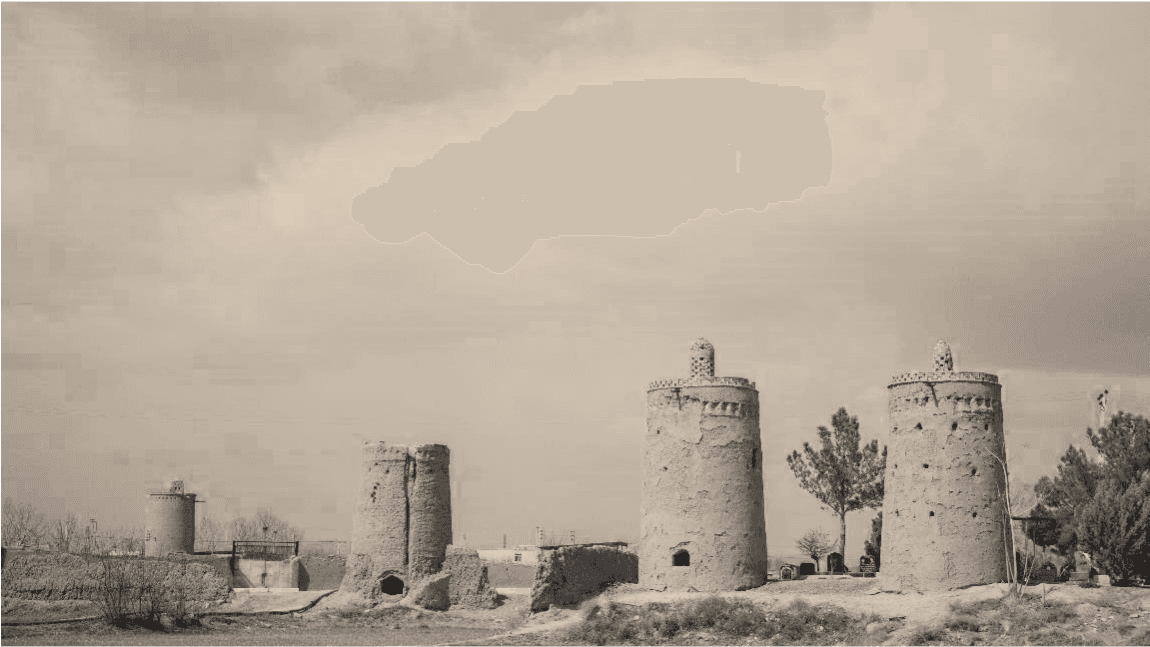
A Short Story in Response to the Project, by Laura Baig:
When Zahra sets out for the market one year into her new life in the US, a January morning sharp with light, she feels she might be beautiful. The powder on her brows glistens, her eyeliner is an elegant swoop, her contouring sharpens her cheekbones and nose, giving her an allure that is almost lynx-like. She has waited all of her 30 years to feel just like this. Beneath her loose red scarf and jacket, her long dress and boots, she peers out at passersby, meeting their gazes for brief, tremulous instants before her eyes dart away.
At the market, pigeons peck at crumbs in front of a bakery stand, and two men pause, staring at her. She is pleased, disguising the falter of her steps as she continues past them to the fruit stand and lifts an orange. After a moment, she looks over, careful to aim her glance at the pigeons instead of the men, watching their scaly pink feet dancing, their marble-feathered necks bobbing.
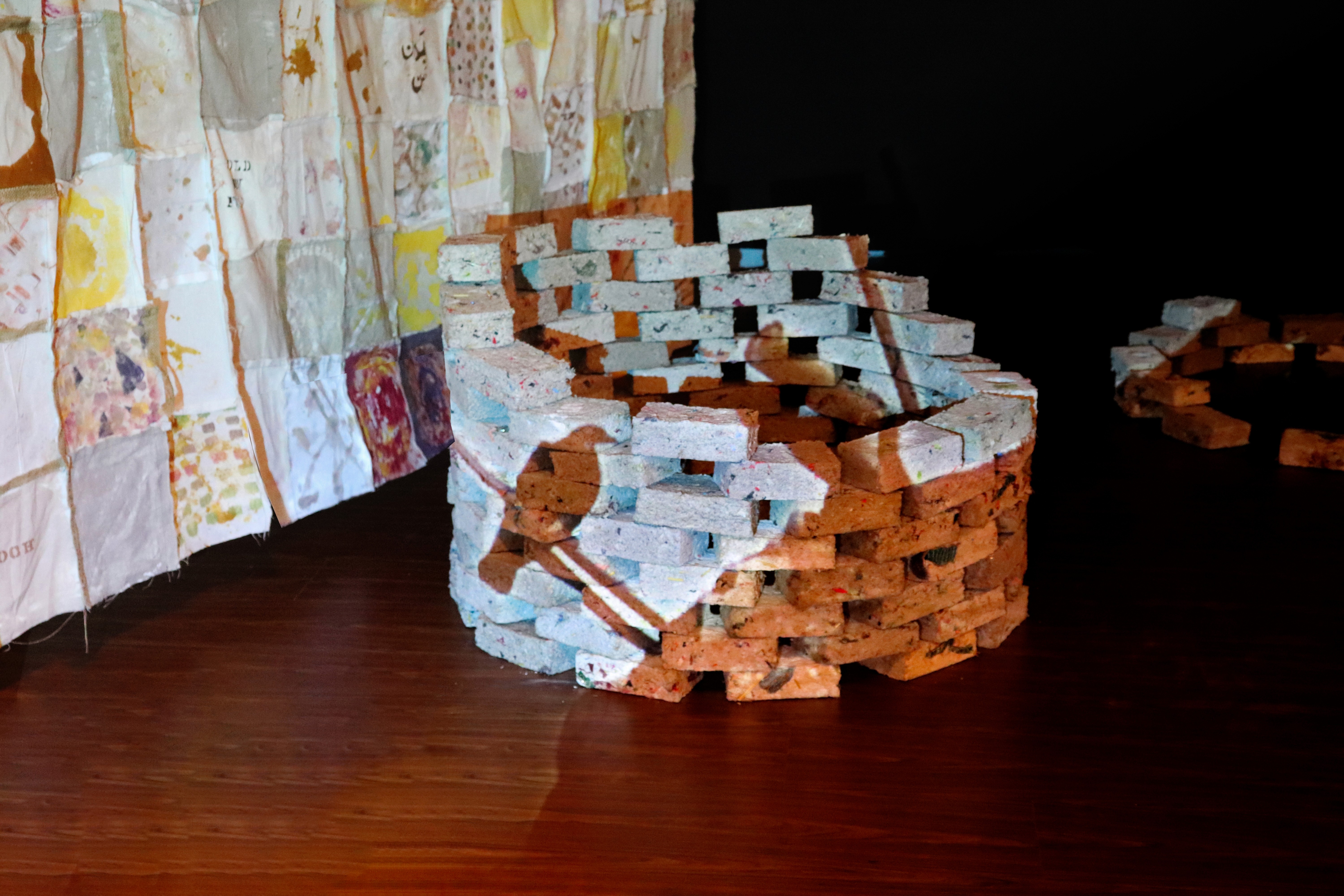
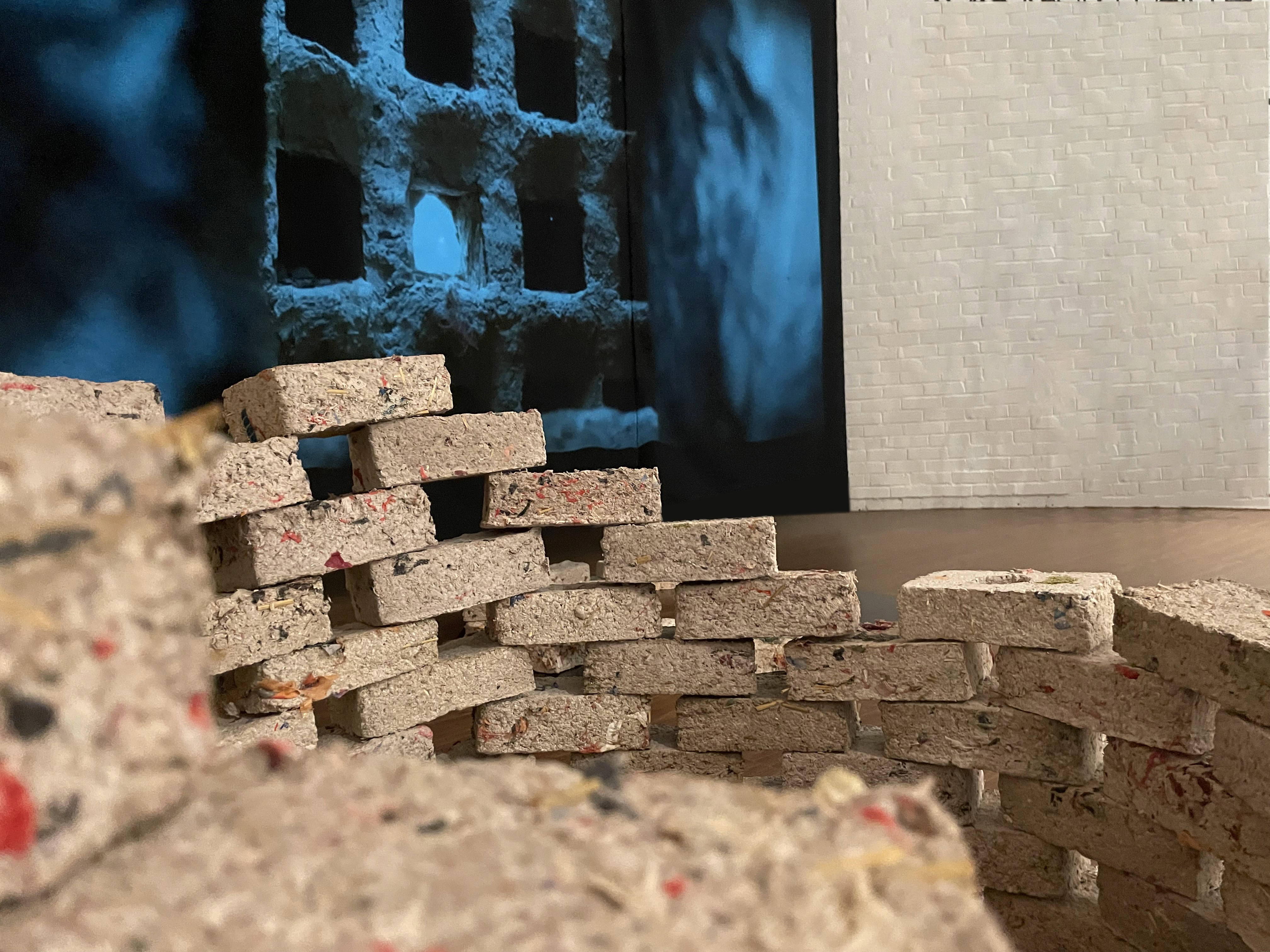
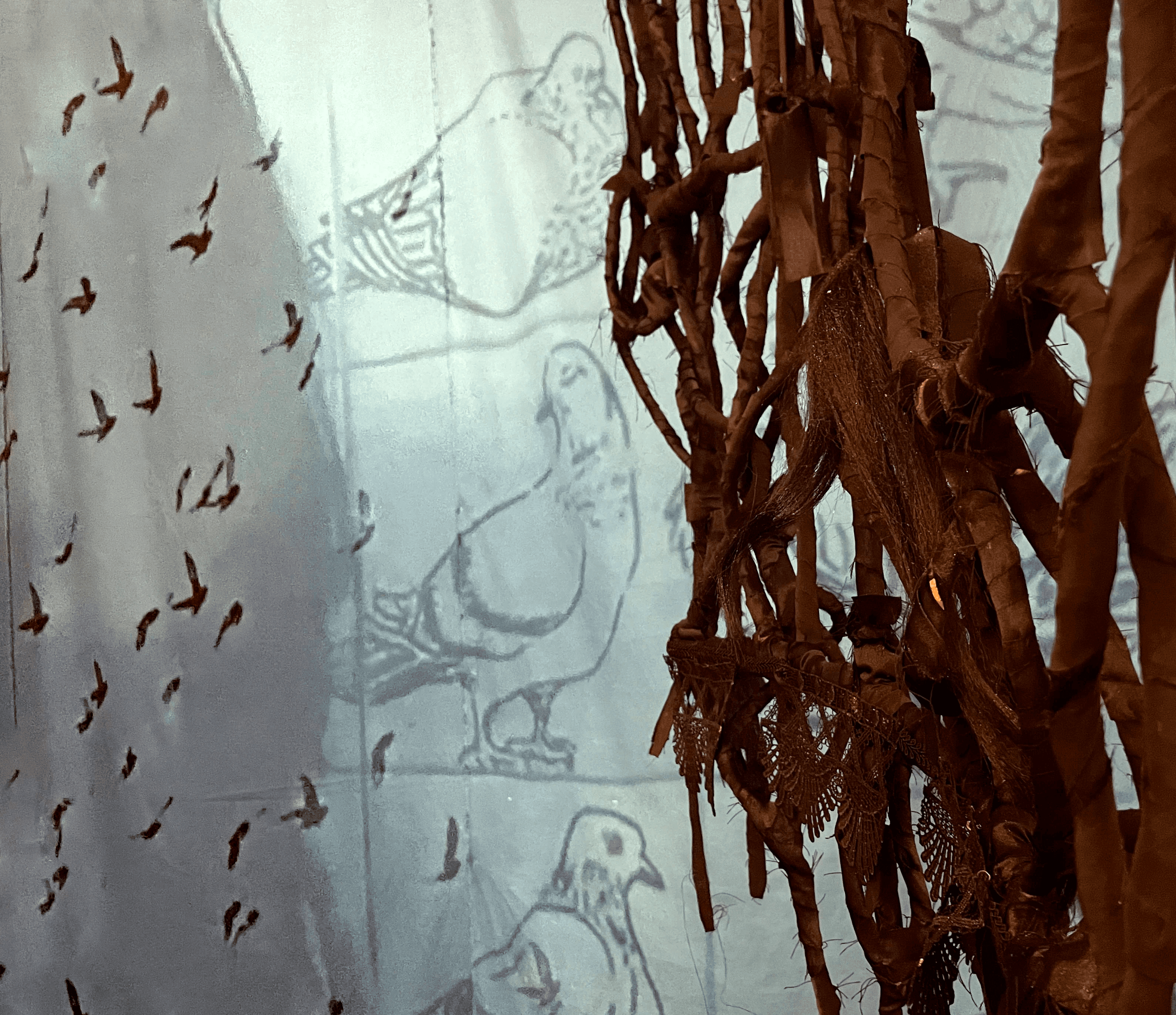
Back home in Persia, pigeon towers dotted the countryside. They were ornate mud-brick structures that scratched the sky with their cupolas and honeycombed vaulting, carved with hundreds of small, arched openings where pigeons had once nested, staring down at the countryside like royalty. But that was long ago, when farmers collected pigeon droppings to fertilize their land—before farms shrank, before farmers stopped leaving offerings of seeds, before the pigeons migrated elsewhere and the towers became beautiful, crumbling landmarks to point out on the way from one city to the next. In Tehran now, people kept pigeons on their roofs, like Zahra’s uncle, raising them to perform tricks to show off to friends. When Zahra was young, she’d sneak up to the roof just before the sun set for maghrib prayer, the streets quiet, the orange sky bleeding purple. The pigeons peeked out at her from little holes of wire mesh in their coops, softly cooing. If she was lucky, there were new chicks, testing their bulbous beaks and ruffling their thin, yellow feathers. It was almost impossible to believe they would one day become the same birds that looped through the air at her uncle’s bidding, that somersaulted mid-flight, that flew away and somehow always found home again.
She thought of them every time she was in Tehran city center, trying to imagine becoming a woman someday like the women there, with their bright lips and owl eyes and makeup like a second skin. They sauntered confidently and laughed, showing their hair. But how could she become a woman when she was always doing the wrong thing: tying her hijab so it puckered, overcooking the rice, following her cousins around when she was supposed to be studying, studying when she wasn’t supposed to be performing well in a school they couldn’t afford, too in the way when her uncle’s friends were over, too out of the way when her aunt needed her to run errands, not out of the way enough each time her oldest cousin found her alone and made her come with him into his parents’ empty bedroom so he could lay on top of her and kiss her.
But now, she is a woman, studying for an advanced degree, free to look and dress and act just as she likes. Zahra moves toward the bakery stand and picks up a baguette. She tilts her head to the side, where she can sense one of the men beside her, the tall one. But then a rush of children careen around the corner, and the pigeons explode into flight, wings whooping. The man flinches back from the birds, pushing into her. She lands on the ground, her dress hitched almost to the tops of the legs she had dared to bare underneath.
“Sorry, you okay?” the man says, offering his hand, but eyeing her legs, like the hand is for them.
She accepts his help, quickly pulling down her dress as she stands, adjusting her scarf, her jacket. His eyes, when she looks up, have locked onto hers, his face close. She realizes she is pulling her scarf over her hair and pulls it back down.
“I’m okay,” she says. “And you?”
His eyes crinkle, delighted at her accent. “Terrible trash creatures, aren’t they?” he says.
It takes Zahra a moment to understand he is talking about the pigeons. They are feasting on the baguette that has landed near a trash can, feet picking carefully around discarded plastic wrappers.
“Right, George?” he says, eyes not leaving Zahra’s as he claps his friend on the shoulder.
George wrinkles his nose at the birds. “Oh, yeah. They eat enough trash, they grow up to be bigger trash. They mate, they form little trashlings.”
The tall man laughs and continues speaking, eyebrows hitching at Zahra in silent invitation. She smiles and tries to maintain eye contact, to offer soft, agreeable responses. But she can feel herself far away, looking out at this man from a small, arched opening, the rustle of feathers and cooing loud in her ears. She can see the moment he begins to grow bored of her, when the decoration of her face, the tightness of her dress, the peek of collarbone below her scarf are no longer enough. She wants to nestle against the warm feathers beside her, and she wants to force herself from the small opening. She wants to fly high with her flock, always with a small, beautiful perch to return to, and she wants to tumble out from it and break her useless wings against the earth. The man gives her one last, small eyebrow rise. She tries her most alluring, desperate smile. He waves at her halfheartedly, and he and his friend are gone.
Eventually, the sky turns a dark, fuzzy grey. The stall owners begin packing away their displays. Zahra watches as, one by one, the pigeons flap into the sky and navigate home.